
Lipoprotein(a): The hidden heart risk your checkup might be missing
Lipoprotein(a): The hidden heart risk your checkup might be missing
You've done everything "right." Your annual checkup comes back clean — cholesterol in range, blood pressure normal, sugar under control. Heart attacks still show up in people who looked exactly like that on paper, often in their 30s and 40s across Hyderabad's IT corridor. One of the most common reasons: a risk factor most routine checkups never test for at all.
01What is Lipoprotein(a)?
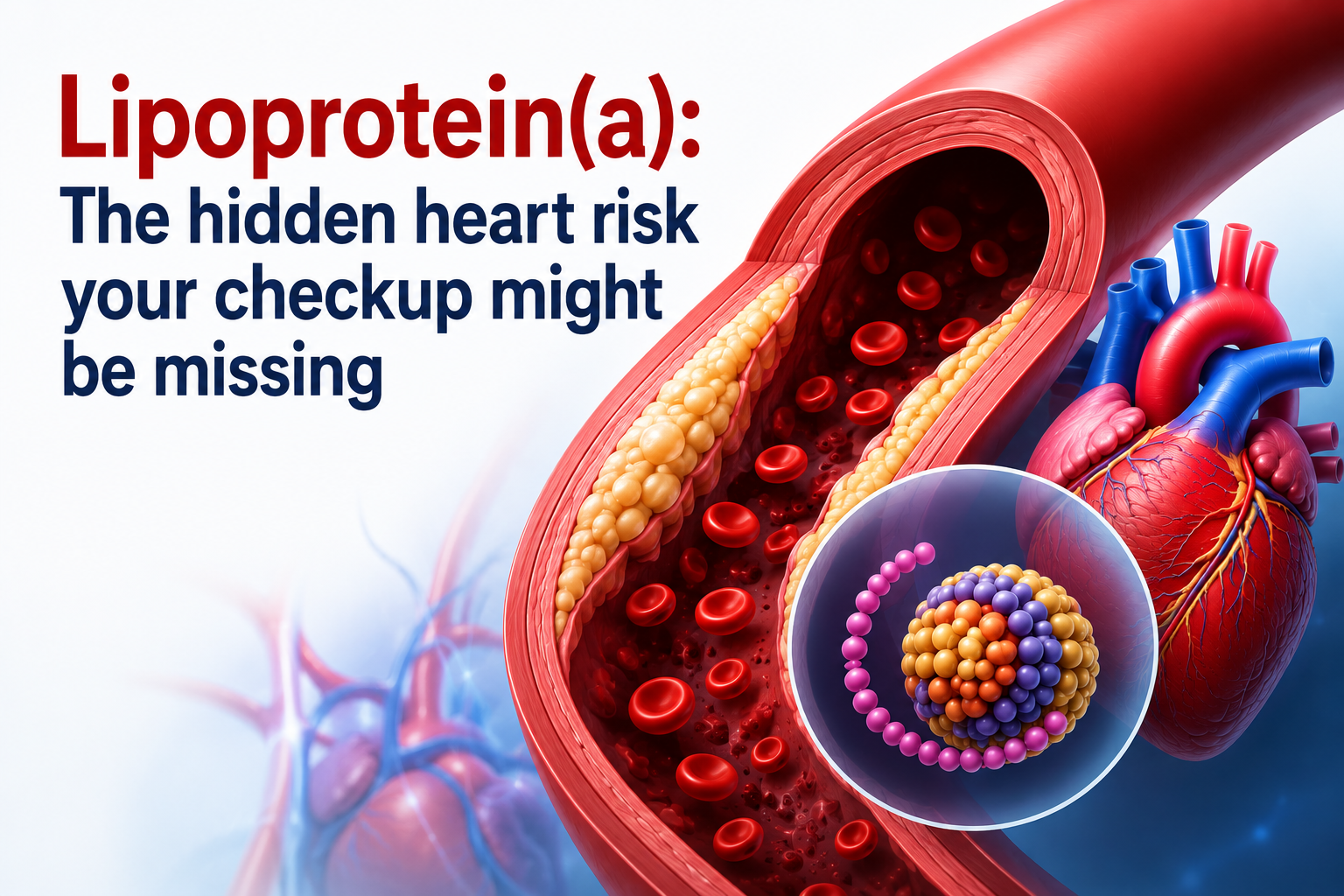
Lp(a) is a particle in your blood, similar to LDL ("bad") cholesterol, but with an extra protein attached that makes it more likely to stick to artery walls and more prone to promoting clotting. Unlike LDL, which responds to diet, exercise, and most cholesterol medications, Lp(a) levels are set almost entirely by genetics. You're born with your level, and it stays largely the same for life — regardless of how well you eat or how often you exercise.
That's exactly why it matters: a person can be fit, non-smoking, and have "normal" LDL cholesterol, and still carry significant cardiovascular risk because of Lp(a) alone.
02Why it matters more if you're South Asian
South Asians as a group tend to have heart attacks nearly a decade earlier than people of European descent, with more aggressive, multivessel coronary artery disease. Elevated Lp(a) is considered one of the contributing factors.
Combine that genetic backdrop with life in Hitech City — long sedentary hours, high-stress global-client schedules, disrupted sleep, food-delivery-dependent eating — and cardiac risk can build quietly well before symptoms appear.
03Why standard checkups miss it
- ✓Total cholesterol, LDL, HDL, triglycerides
- ✓Fasting blood sugar / HbA1c
- ✓Blood pressure, basic ECG
- ✕Lipoprotein(a)
- ✓Everything in a standard panel
- ✓Lipoprotein(a) — tested once
- ✓ECG and echocardiogram
- ✓Full cardiovascular risk assessment
Lp(a) requires a specific, separate blood test not bundled into most corporate wellness packages. Because it's genetically fixed, it typically only needs to be checked once in a lifetime — yet it remains one of the most under-ordered tests in routine preventive cardiology.
04Who should get tested
| Situation | Why it matters |
|---|---|
| Family history of early heart disease | Parent or sibling with a heart attack, angioplasty, or bypass before age 55–60 |
| Heart disease with no clear cause | Normal LDL, non-smoker, no diabetes — Lp(a) may be the missing piece |
| South Asian ethnicity | Higher background prevalence of elevated Lp(a) |
| Recurrent blockages after treatment | Despite good cholesterol control post-angioplasty or bypass |
| Planning a thorough risk assessment | Beyond what a routine annual checkup covers |