Heart Attack Warning Signs You Should Never Ignore
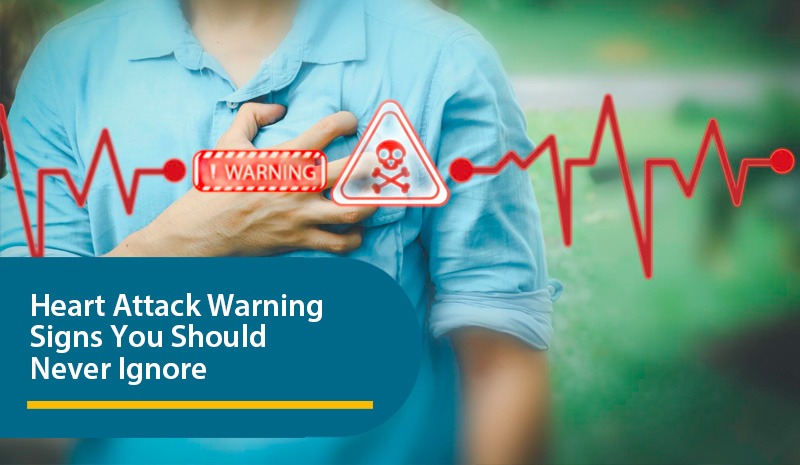
A heart attack does not always announce itself the way films portray — no dramatic clutch of the chest, no immediate collapse. Many heart attacks start subtly, with symptoms patients dismiss for hours or even days. In India, delayed presentation to hospital remains one of the most preventable causes of heart attack deaths. Recognising the early warning signs — and acting fast — is genuinely life-saving.
The classic symptoms — and why they are often missed
The textbook heart attack presents with chest pain or pressure — often described as a tight, heavy, squeezing, or crushing sensation in the centre or left side of the chest, lasting more than a few minutes. It may radiate to the left arm, jaw, neck, back, or upper abdomen.
But in practice, many patients describe it differently — or don't experience chest pain at all. Here are the symptoms that are commonly dismissed or misattributed:
| Chest tightness or pressure | The most classic symptom. Often described as 'someone sitting on my chest' or 'a band tightening around the chest.' It is not always severe pain — it may be a dull ache or discomfort. |
| Arm pain or numbness | Pain, heaviness, or numbness radiating down the left arm — or occasionally both arms. Can occur without any chest symptoms. |
| Jaw or neck pain | Aching or discomfort in the jaw, neck, or throat — particularly during exertion. Frequently misattributed to dental pain or muscle strain. |
| Breathlessness | Sudden unexplained breathlessness, particularly at rest or with minimal activity. Can occur without any chest pain — especially in women and diabetic patients. |
| Upper abdominal pain or nausea | Discomfort, burning, or pain in the upper abdomen — easily confused with acidity or indigestion. Nausea, sometimes with vomiting, is common particularly in inferior wall heart attacks. |
| Sweating | Cold, clammy sweating without exertion or fever — a classic accompaniment to a heart attack, reflecting activation of the sympathetic nervous system. |
| Unusual fatigue | Sudden, extreme tiredness that is disproportionate to any physical activity — particularly in women, this may be the dominant or only symptom for hours before the heart attack. |
| Dizziness or lightheadedness | Feeling faint, unsteady, or about to pass out — particularly if accompanied by any of the above symptoms. |
Who is at highest risk in Hyderabad and South India?
India — and Telangana in particular — faces a disproportionately high burden of heart attacks, and increasingly in younger individuals. Several factors amplify this risk in our population:
- Premature coronary artery disease — Indians develop heart disease 10 to 15 years earlier than Western populations, often due to genetic predisposition to high lipoprotein(a) levels and smaller coronary artery calibre
- Diabetes — India has the second-highest diabetic population globally. Diabetics frequently have 'silent' heart attacks with minimal or no chest pain — making recognition harder
- Hypertension — poorly controlled blood pressure dramatically accelerates coronary artery disease
- Sedentary urban lifestyle combined with high-stress IT sector employment — a pattern very prevalent in Hyderabad's HITEC City and Hitech City corridors
- Smoking — including heavy bidi use in older and rural populations
- Family history — a first-degree relative with heart disease before age 55 (men) or 65 (women) significantly elevates personal risk